.png)
%20(1).png)


The 3 P’s Kids Need for Sustained Play


Recently, I had the opportunity to be part of a segment on Toronto’s Breakfast Television to talk about the return of the “90s kid summer” and why many parents might be finding their kids struggling to figure out what to do with all their free time.
At the beginning of summer, parents were all over social media sharing their plans for giving their kids a 90s kid summer. Those posts have quieted down, and I believe it’s because it wasn’t working out quite like they envisioned. And that’s because today’s kids are missing 3 important things that 90s kids had. I call them the 3 P’s kids need for sustained play: Practice. Permission. Possibilities.
1. Practice

Kids need practice figuring out what to do with their own time. When we constantly respond to “I’m bored” by suggesting an activity, setting something up, or providing entertainment, we take away the opportunity for them to work through that boredom themselves. It might be uncomfortable at first, but the more opportunities kids have to come up with their own ideas, the better they become at it.

For kids who need a little help getting started, I created an Idea Activator Jar. The ideas aren’t meant to tell kids exactly how to play, but to give them a starting point until generating their own ideas becomes easier.
You can download a free printable resource on my website to create your own Idea Activator Jar at home and help your child practice filling their own time.
2. Permission

Kids also need to know what they’re allowed to do. When they have to ask before taking out materials, moving things around, going outside, or trying an idea, it’s hard for play to develop independently.
Creating a Yes Space gives them the freedom to follow an idea without waiting for an adult at every step.

A Yes Space should be filled with materials that encourage open-ended, creative play. It’s not a shelf full of store-bought toys. Instead, you might find open-ended craft supplies, recyclables and other loose parts that can be used in a wide variety of ways. When children know these materials are available for them to explore freely, they have permission to follow wherever their ideas take them.
You can download a free printable resource on my website with ideas for creating your own loose-parts-filled Yes Spaces, both inside and outside.
3. Possibilities

Finally, kids need materials that leave room for possibilities. Open-ended materials like cardboard, fabric, blocks, sticks, tubes and other loose parts don’t tell children what to make or how to play. Instead, they invite the question, “What could this become?” The more varied materials children have access to, the more possibilities they have to imagine, problem solve and take their play in their own direction.

You might be thinking, “But my kid has a million toys and they’re still bored all the time.”
That’s because many toys can become boring. Once a child has used them and seen what they do a few times, the novelty wears off. Children want to be challenged, test out theories and create their own worlds. Loose parts and open-ended toys make room for all of that to happen.
Helping Kids Put the 3 P’s Into Practice
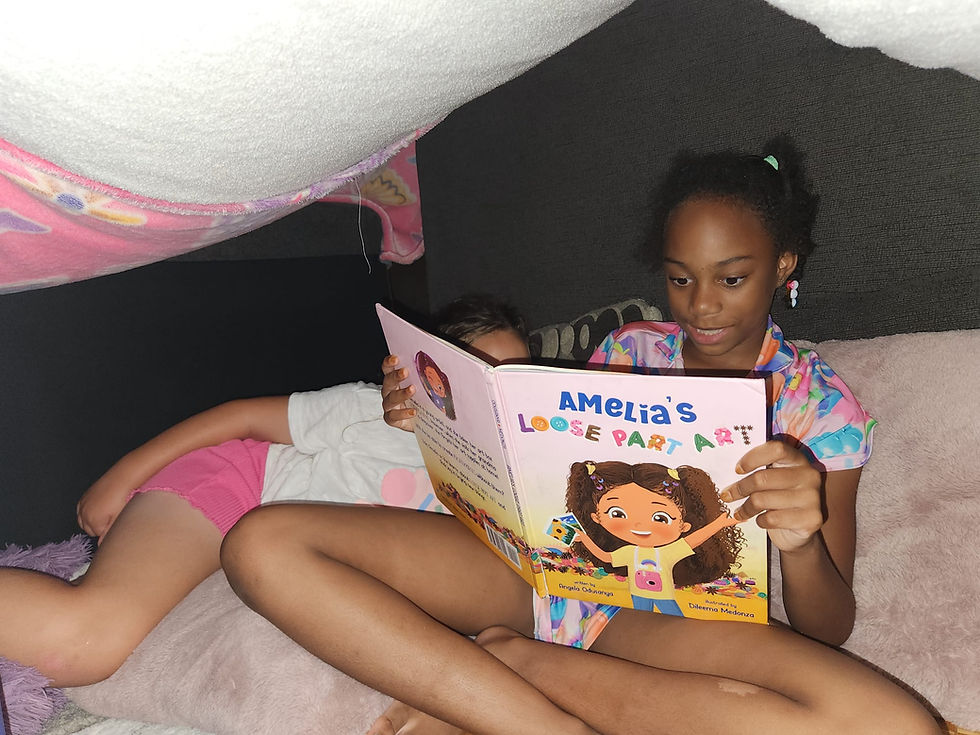
The Amelia’s Loose Part Art series is also intentionally designed to help kids practice solving their own problems (including boredom) by watching Amelia move through a cycle of thinking, planning and doing. Amelia learns to look at what’s around her, come up with an idea, work through problems and keep going.
Each book also includes a unique Grown-Up’s Guide filled with ideas to help adults navigate permission and possibilities through different forms of loose parts play.

It was never really about giving kids a 90s kid summer. It was about wanting to slow down, live a little simpler and give kids more time to play.
Kids can learn to enjoy that kind of childhood, too.
They might just need a little practice, a little more permission, and the right possibilities.


Comments